Rules of working life in English at Murikka: “Without information, you’re lost”
TEXT MEERI YLÄ-TUUHONEN
PHOTOS JYRKI LUUKKONEN
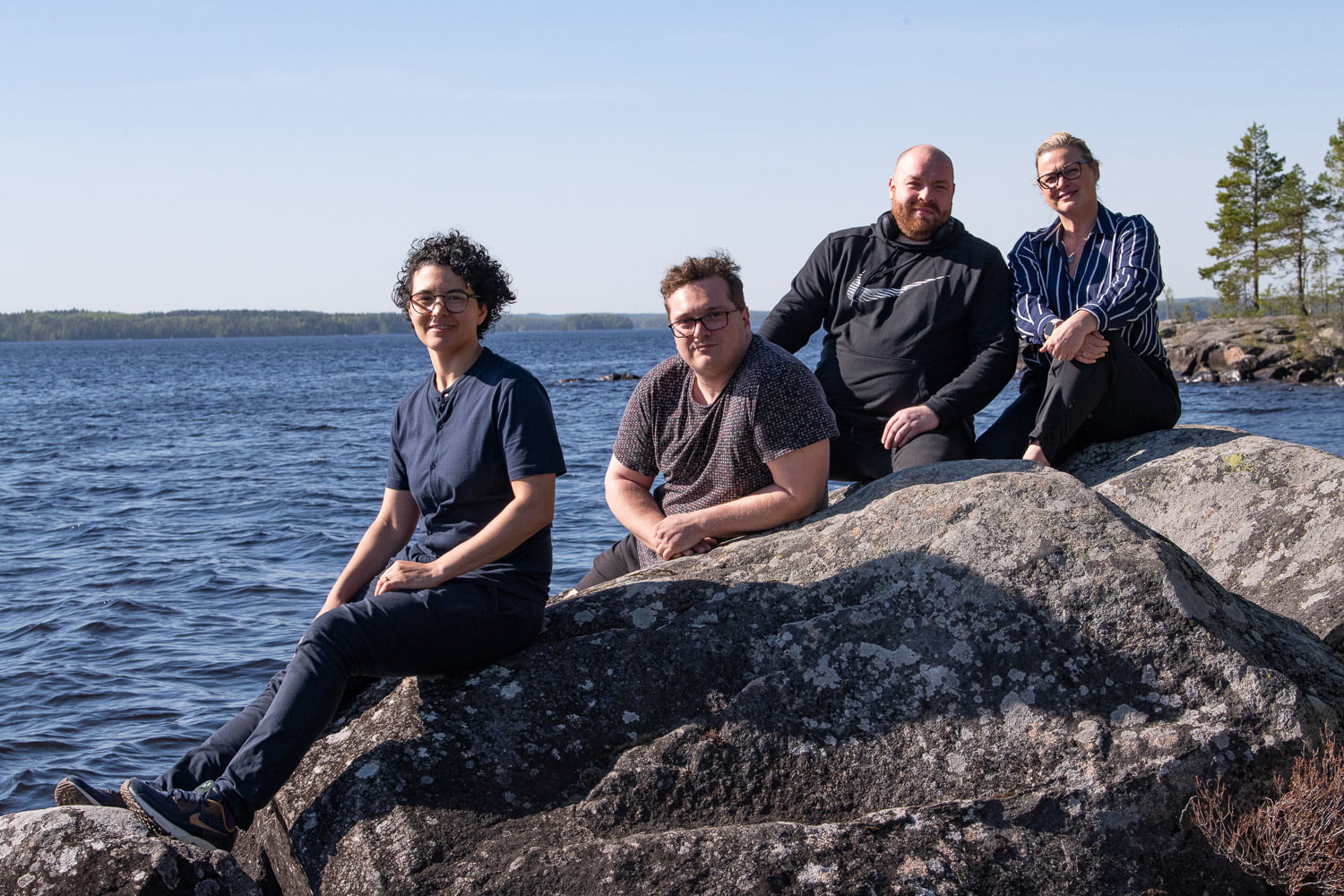
In the Industrial Union’s courses, workers of foreign background learn about Finnish working life and their rights. Four people who have moved to Finland share their story.
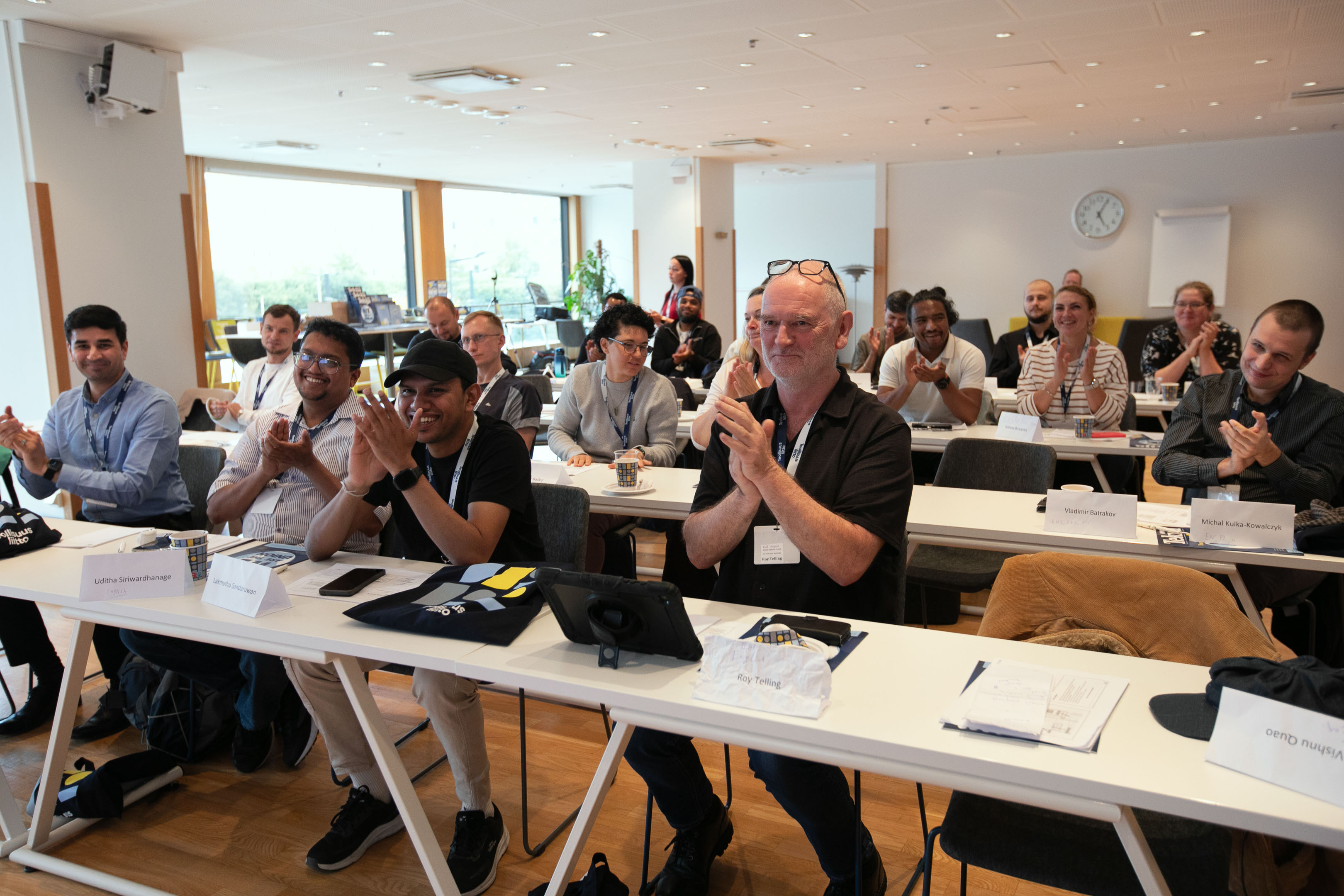
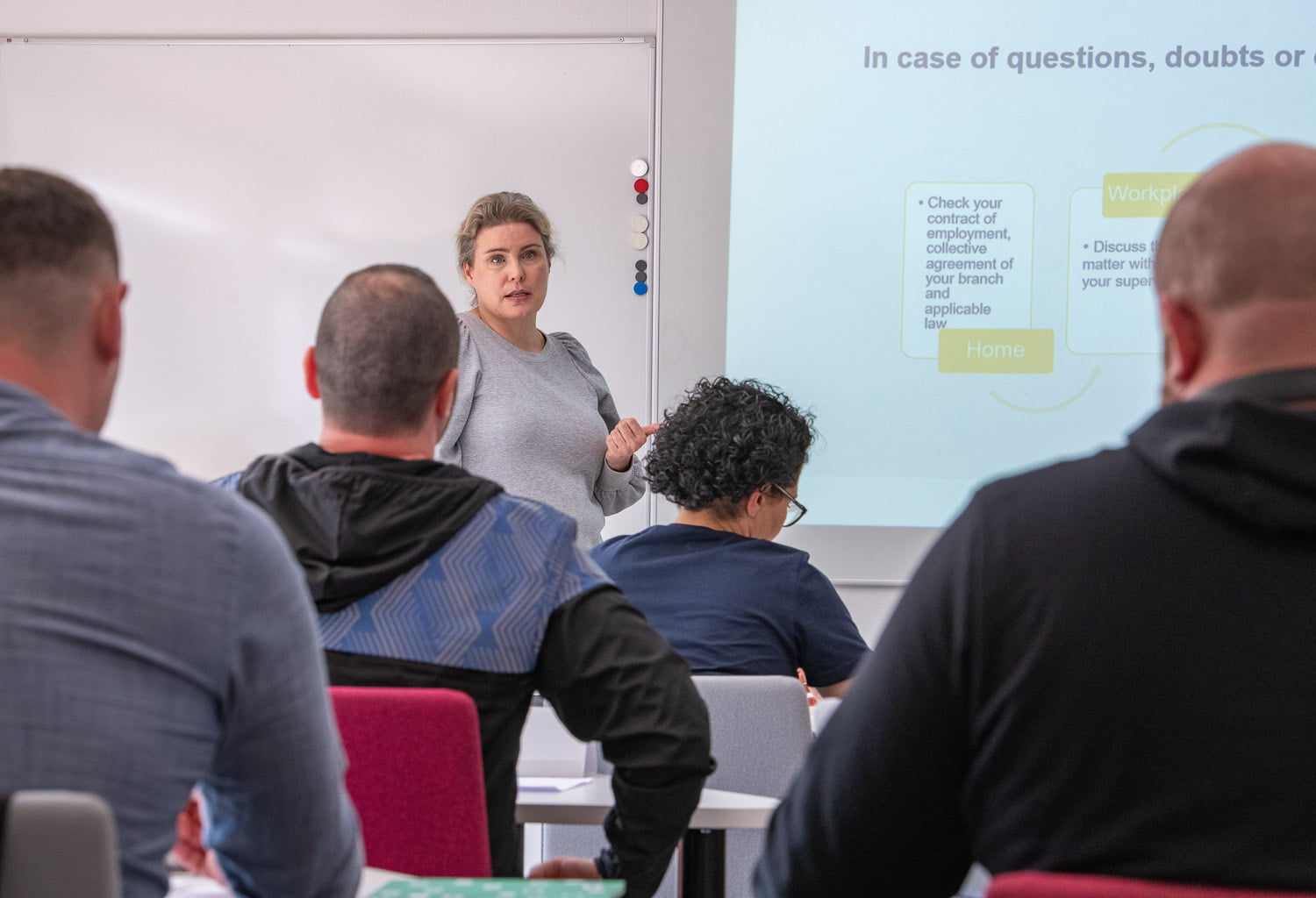
In the Latomo conference room at Murikka Institute, a group of Industrial Union members of foreign background listen to a lecture on the rules of working life in English.
“If you experience problems in the workplace, you can use what you’ve learned here to find out if the solution is found in the employment contract, collective agreement or the law,” says course instructor Riikka Vasama.
One of the members attending the course is Yaroslav Slíž from Slovakia. He came to Finland two years ago with the intention to fulfil his dreams.
“My biggest dream is to own a house by the lake. Finland was the best choice for me because there are so many lakes here. Our lakes in Slovakia are small.
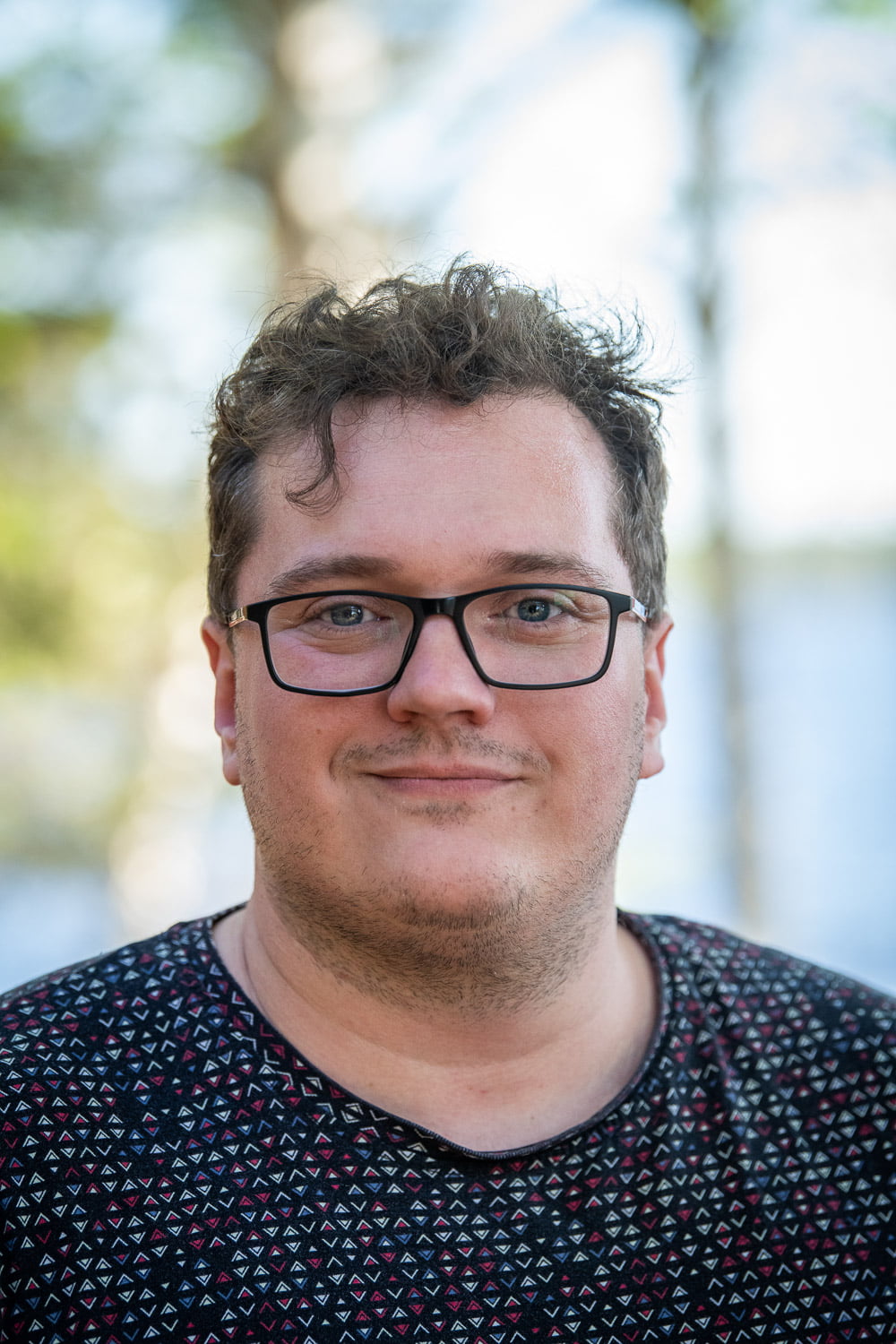
Slíž values natural peace and space and doesn’t want to live close to neighbours. That’s why he’d like the lake to be large. He and his girlfriend dream of starting a family.
“I’ve travelled a lot in Europe but haven’t been to the Nordic countries before. I’ve always wanted to settle in Finland, Sweden or Norway precisely because of their natural beauty.
Ultimately, Slíž chose Finland because his friend already lived here and recommended the country. Slíž decided to try life in Finland and moved to Rauma to work as a CNC machinist.
“Finding a job was very easy for me. My friend told about me to his manager, after which I was contacted by the temping agency Barona.
Matters were made easier by the fact that Slíž is a skilled professional. He had worked in Slovakia as a CNC machinist for almost ten years before moving to Finland.
In May, Slíž changed jobs and is now a CNC machinist at Purso-Tools in Pori.
“I mostly work on camshafts for the diesel engines of large ships,” he says.
MOTIVATED BY A THIRST FOR INFORMATION
Jaroslav Slíž found his way into the course on the rules of working life after learning from an email newsletter that the Industrial Union is hosting courses in English.
“I already attended the You have rights course back in April in Uusikaupunki. This is my second course, and I plan to take more courses in English in the autumn as well.
Slíž enrolled in the union’s courses because he had a strong thirst for information.
“Knowledge is one of the most important things in this world. Without information, you’re lost. I would like to see the union also offer courses in English on specific collective agreements,” he says.
In Slovakia, Slíž never belonged to a union. This is not uncommon in the country, as only 17% of employees in Slovakia belong to a trade union. In Finland, the unionisation rate of employees is 74%.
My biggest dream is to own a house by the lake.
Slíž first heard of the Industrial Union at the TE Office some eighteen months ago when he was laid off for the first time.
“I was told that if I am not a member of a union and want to receive at least some compensation during the layoff, I would need to apply for unemployment benefits from Kela”, Slíž recounts.
Slíž has enjoyed his time at Murikka Institute. At the end of the second day of the course, he headed for a walk and then to the sauna.
“This is like my dream: a house in the forest by the lake. The house is just slightly bigger.”
Slíž’s dream of starting a family is about to come true. He says that he got engaged with his Finnish girlfriend the week before the course.
DRAWN TO FINLAND BY SON’S WISH
Newspaper deliverer Miranda Kihlström, who moved to Finland from the UK, heard about the Rules of working life course from a coworker.
“They’d had been in one of the previous courses and said it was really good. I’m now very much looking forward to future courses in English.
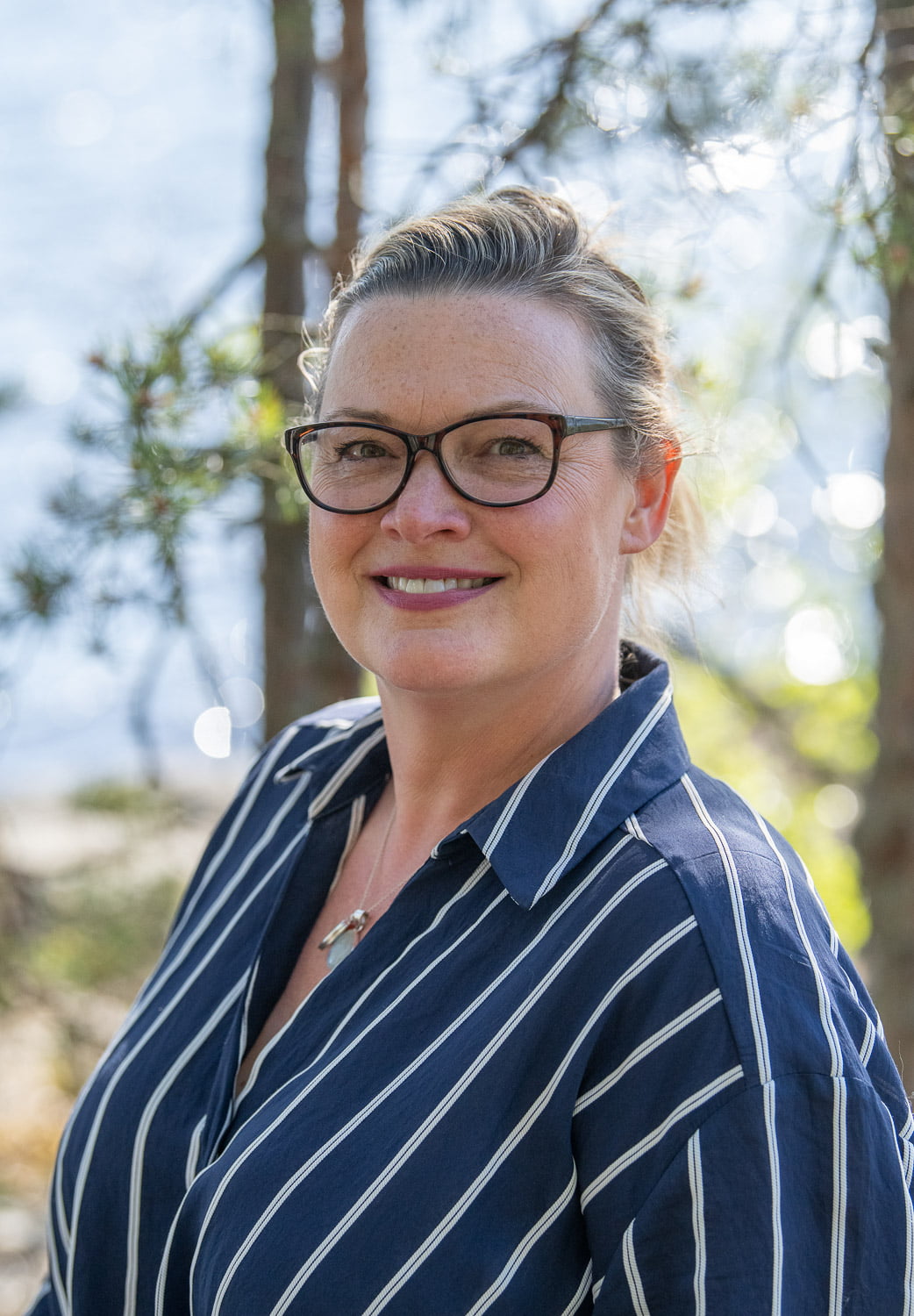
For Kihlström, the course served as a way of getting acquainted with Finnish working life. Among other things, she learned why the holiday season in Finland falls on the summer months.
“The course instructor told us that Finns like to spend their holidays in the summer. I, on the other hand, prefer to take my vacation in the winter and travel someplace sunny and warm.”
For the first time in her life, Kihlström belongs to a trade union. She decided to join the Industrial Union after learning about the security provided by membership.
“What especially caught my interest is that if I’m uncertain about something, I can call the union and ask for advice as because of my background, I’m not always familiar with how things work in Finland.”
Kihlström also believes that being a member will help her integrate into Finnish society.
Kihlström is a single parent of a 16-year-old boy. The two moved to Finland at the son’s wish. Kihlström’s son is half Finnish and wanted to come to study in Finland to get to know his roots better.
“He grew up in the UK and knows the British side of his family. He’s only visited Finland on vacation and wanted to stay here for longer this time. He also plays ice hockey, so Finland is the perfect country for him.
The mother and son are now both learning Finnish. Kihlström has ran into a few obstacles in trying to learn the language. To her frustration, Finns seem to want to converse in English with her instead of Finnish.
“I don’t really have a chance to practice Finnish at work either because I work alone.”
“FINDING A JOB HAS BEEN HARD”
Kihlström moved to Tampere last November and began work as a newspaper deliverer at Posti in December. In her experience, finding a job in Finland was very difficult.
“My previous work experience isn’t very useful because I don’t speak Finnish and I don’t have a degree. Jobs for English speakers are mostly in the IT and technical sectors,” says Kihlström.
She spent more than 20 years in the travel industry before switching to the wellness industry and later starting her own business. However, she had to give up the business when her father became ill and passed away.
If I’m unsure about something, I can call the union for advice.
Kihlström began looking for jobs in Finland already before moving to the country.
“I joined Facebook groups that helped people from the UK make the move to Finland. That’s where I met Micheala, who told me about the job opportunity at Posti.
According to Kihlström, working in newspaper delivery is not ideal for her as it doesn’t allow her to use her skillset. She also doesn’t get to work as part of a team, which she enjoys.
“The work also has many positives. At night, it’s calm and quiet. The work itself isn’t stressful, and I get to enjoy beautiful nature. Posti is a large company, which opens up opportunities.”
In addition to working, Kihlström volunteers at Bloom ry, a non-profit based in Tampere where foreigners and locals can meet.
CULTURES CLASH AT WORK
The majority of participants in the Rules of working life course work in industrial sectors, including Lev Bahtin, a Russian-speaking Estonian who came to Finland for work at the request of a friend.
“My friend was a plant operations manager here and needed workers he could trust. He was offering manual work with good pay.

Bahtin joined the Kotka-based Eagle Filters, a manufacturer of industrial filters, in September 2021. At first, he felt that his coworkers were slow and lazy, as he was used to working at a different pace in Estonia.
“Finns don’t live to work, but work to live. They don’t come home from work physically and mentally drained. That was the first thing I had to learn and understand.”
Bahtin also encountered other cultural differences in the workplace.
“I admire strong and independent Finnish women, but if I see a 60-kg woman pushing a load that weighs 12 to 15 kg, I will of course go and help”, says Bahtin.
However, many of his coworkers refused the help. They felt that I thought they were weak or that I wanted to show off to appear strong,” says Bahtin.
“I explained that if I can do something for them that is easy for me, I’d be happy to do it. We all have our strengths and should use them.”
After a few months, Bahtin’s coworkers no longer refused his help and some even asked for it.
“Although Finns can be cool as ice, it doesn’t take much to break the ice when you get to know them better,” says Bahtin.
AN UNPLEASANT SURPRISE ON NIGHT SHIFT
After he’d been in Finland for six months, the friend who encouraged Lev Bahtin to move changed jobs and returned to Estonia. Bahtin stayed behind in Kotka.
“We got a new operations manager, and after a year, I asked him for a raise. He said twice that he’d get around to talk to me about it, but then forgot the whole thing.
Another year went by until one Saturday night shift in April, Bahtin was told out of the blue that he was being let go.
“Can you imagine? I’d worked two morning and two evening shifts and when I came in for the night shift, I was told I was dismissed. The boss said that the company was in financial difficulties and that I was too expensive of an employee. I was of course shocked,” Bahtin recounts.
A silver lining was that Bahtin had joined the Industrial Union the previous autumn. Thanks to this, he met the requirements for receiving earnings-related unemployment allowance.
“My Finnish coworkers would say that joining a union was a waste of money, but my Estonian friend Georgi told me that there were benefits to being a member of a union.”
Although Finns can be cold, it doesn’t take much to break the ice.
When Bahtin heard about earnings-related unemployment allowance and courses offered by the union, he decided to put in his application. Bahtin has found the Rules of working life course useful.
“If I’d taken the course six weeks ago, I would never have signed anything until I had spoken to a shop steward.”
As things stand, when he was dismissed, Bahtin ended up signing an agreement that exempts the employer from the obligation to re-hire him.
“I tell everyone that if someone brings you papers to sign on a Saturday night, don’t do it. You have time to wait until Monday and ask for advice.”
BREXIT LED TO THE DECISION TO MOVE
Micheala Bailey, who works in newspaper delivery at Posti, raises her hand to ask a question in the Latomo classroom at Murikka Institute.
“How do I know if an employer is organised? That could be useful to know when looking for a new job,” she asks.
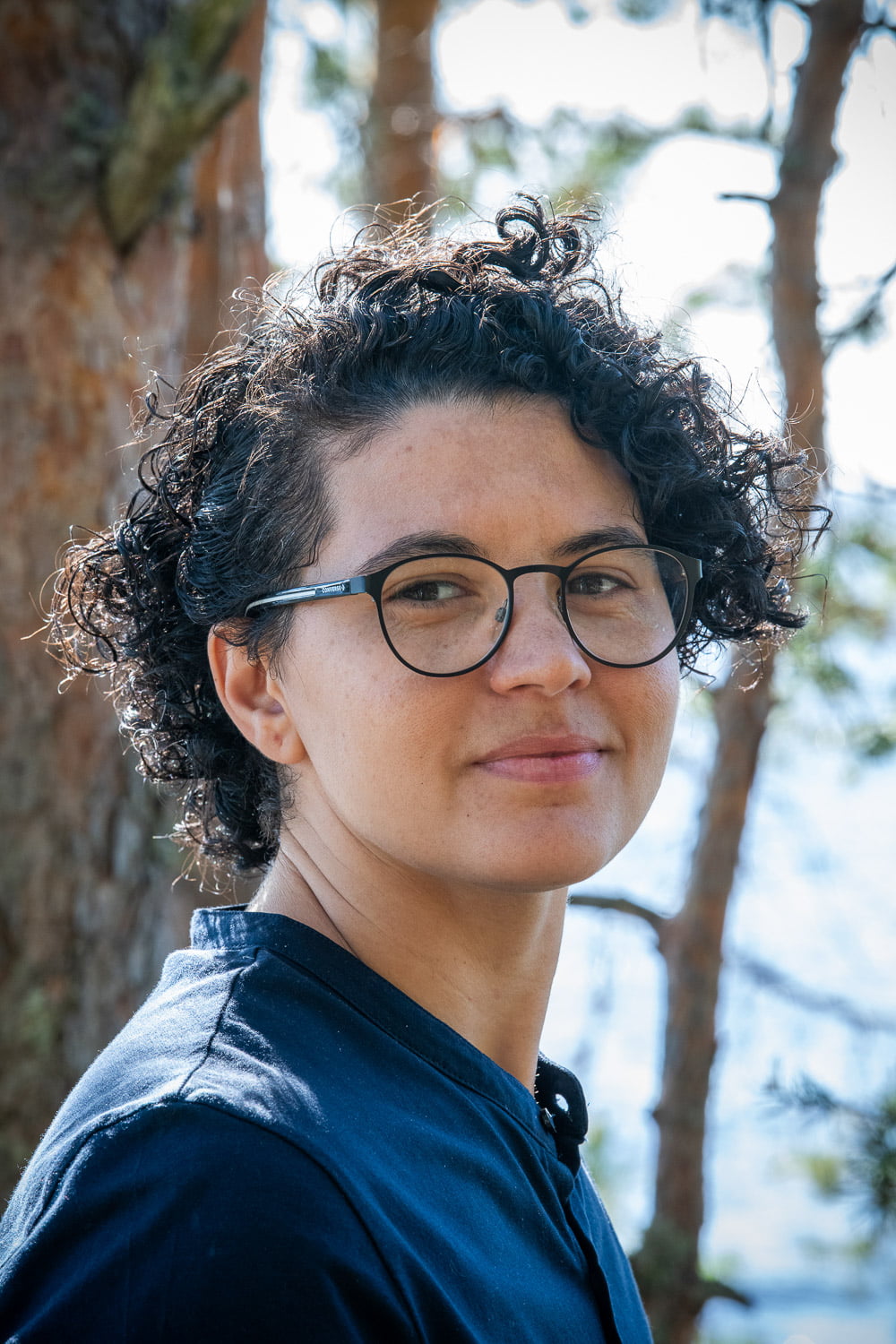
Bailey and her Finnish husband moved from their home in Scotland to Finland just over four years ago because Bailey’s husband was homesick.
“He’s very close with his family whereas I don’t have much family in the UK, so we decided to move to Finland.
Our decision was also affected by Brexit,” Bailey says.
“Before, we could travel between Finland and the UK as much as we wanted and we both had the right to live in either country. After Brexit, we had to make the choice to settle in one of either country.”
Settling into Finland has been a challenge for Bailey. In particular, she misses her old job. Bailey is a social worker by training. Back in Scotland, she worked in children’s homes.
“I loved my job. I enjoy working with young people and had a lot of freedom in my work. I could do all sorts of fun things with the kids.
Bailey recalls how she used to take young people interested in sports to basketball and football matches or go on vacation in Spain with the youngsters.
“I have some really positive memories. I had a great time and even got paid for it. In Scotland, I always worked with other people around me. Now, I’m working a job where I’m always alone.”
In her current job, she travels around Pirkanmaa by car, scooter or bike.
“I cover delivery routes all over Pirkanmaa when others call in sick, for example. I might be working in Sastamala one day and in Ylöjärvi or Tampere the next,” Bailey says.
“YOU CAN’T BE PICKY”
Finding a job in Finland is not very difficult, but you can’t be picky,” Bailey says. She came to Finland in April 2020 and started work at Posti in September.
“It was important to me to find a job so that I have some work history in Finland and a reference showing I’m a good and reliable employee.
Bailey was already a member of a union in her home country. “Social workers have a big and strong union in the UK,” she says. Bailey became a member of the Industrial Union after a few twists and turns.
“I first joined the wrong trade union because I didn’t know that newspaper deliverers belong to a different union than postal workers.”
Bailey became aware of the matter lat year when she did not receive a one-time pay raise in accordance with the collective agreement negotiated by the Post and Logistics Union PAU.
I thought the course could be a way to get answers to my questions.
In April, Bailey participated in the English-language course We the Union on the trade union movement. Bailey learned about the Rules of working life course from her chief shop steward.
“Even though I’ve been working in Finland for nearly four years, there are still a lot of things I don’t understand. “I thought the course could be a way to get answers to my questions.”
Bailey now knows how annual holidays are determined in Finland, for example. She says she has learnt more about her rights and feels empowered by the information.
“I can now notice inconsistencies in my current job and know what to do. If I change jobs, I know what I need to pay attention to in the employment contract.”
New courses for foreigners
A total of twelve Industrial Union members of foreign background from all over Finland attended the course Rules of working life taught in English. The three-day course was organised at Murikka Institute in Teisko, Tampere in late May.
“The course starts from the basics. We go over labour legislation, the importance of collective agreements on the terms of employment and the employee’s role as a party to the employment contract,” says Riikka Vasama, course instructor.
She works in the Industrial Union as the Head of the Foreign Labour Unit.
“In the course, participants get answers to questions that are often related to working hours, pay, probationary period, annual holidays and working time reduction days, called pekkaspäivät,” Vasama lists.
“Participants are active, ask a lot of questions and share their own experiences. It amazes me every time how great the group works together despite being so diverse.”
Vasama says that there is a real need for English-language courses as many of the participants say they would have done things differently if they’d had more information about Finnish working life.
“The courses have a positive impact on integration and empowerment. The participants are no longer punching bags in the workplace, but employees who take action and know their rights.”
After the Rules of working life course, union members can now participate in more training in English. The advanced course Union News will be organised for the first time this year, says Vasama.
“The course goes over different themes in more depth and can be taken after completing the basic course.
The Union News course will be organised in Murikka in late September and early October. In October, the first Basic course for shop stewards will be held in English.
In addition, the Industrial Union is hosting the weekend-long course Welcome to Industrial Union in Nuuksio, Espoo. Regional and sector-specific courses in English are also upcoming.
“A special new feature is the course in Ukrainian on the terms of employment in the agriculture and horticulture sectors, which is the first of its kind.”
The Industrial Union’s courses are free of charge to members, and the union also reimburses members’ travel expenses. For more information about the courses, see the Tekijä magazine and the Industrial Union’s study guide. The union also sends out newsletters by email about English-language courses to all members whose language is reported as other than Finnish or Swedish.
“The courses offer new information and a chance to unwind. They are also a great opportunity to get to know other union members,” Vasama says.