Life-threatening injury in a workplace accident – the court found both the client and the subcontractor liable
TEXT MIKKO NIKULA
ILLUSTRATIONS ESKO KUMPUNEN
Both the client company and the subcontractor disputed their liability after an employee was the victim of a serious workplace accident at their shared worksite. The district court convicted supervisors in both the companies of occupational safety violations and causing bodily injury, and the companies were ordered to pay corporate fines.
An employee of a subcontracting company was seriously injured in a workplace accident that occurred in a mining area. The employee was in the engine room of the loading machine performing adjustment work following a major overhaul, which included increasing the pressure. A pressure gauge attached to a pressure stand came loose and was hurled toward the worker with great force.
The employee’s earlobe was torn off and they suffered permanent hearing loss in one ear and sustained wounds to their head. There was also severe damage to the jawbone and the soft tissues of the mouth; for example, the gums were extensively detached in both the upper and lower jaws. The injuries required intensive care and were life-threatening.
In court, the prosecutor brought charges of occupational safety violations and causing bodily injury against four supervisors in the subcontracting company and two in the client company. The injured employee also filed a civil claim for compensation for temporary disability.
THE RISK COULD HAVE BEEN ELIMINATED BY A CHANGE IN WORK PRACTICES
The district court found that adjusting the pressure gauge involved a very obvious risk of an accident, as the employee had to work near extremely high-pressure components when increasing the pressure. Many people stated that they considered the work dangerous. The risk could have been eliminated by changing work practices, as was done after the accident. Contrary to what the defendants claimed, the accident was not unforeseeable.
The employer of the injured worker – that is, the subcontractor company – was aware of the hazards involved in the work but failed to fulfil its duty of care. The company had also failed to conduct a risk assessment. On the other hand, the client company was also partly responsible for what happened at the shared workplace. It had planned and scheduled the major overhaul of the loading machine.
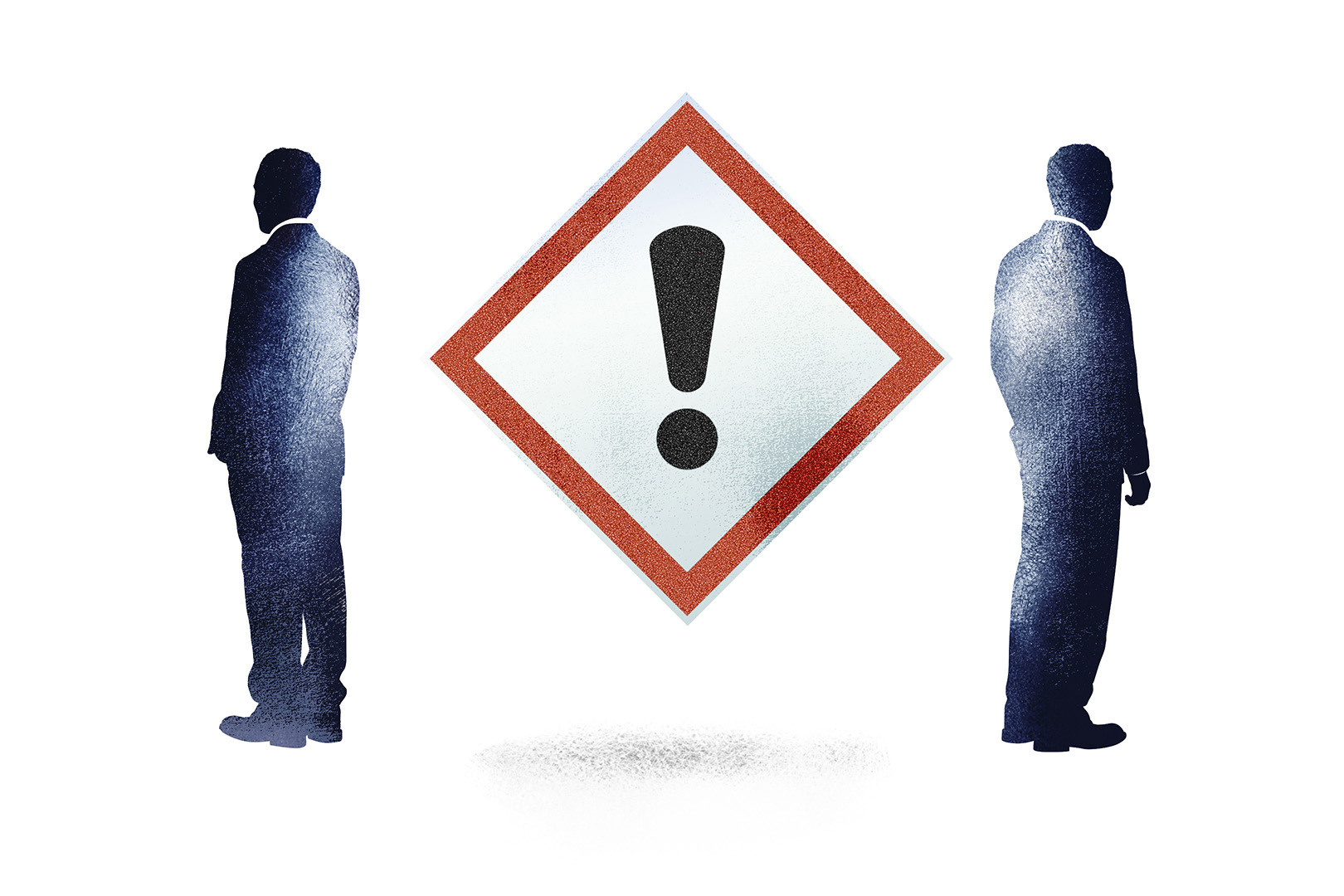
The responsibilities between the companies were unclear, and even in the court proceedings they tried to shift the blame onto one another.
According to the district court, the responsibilities between the companies and the overall supervisory responsibility were unclear, and even in the court proceedings they tried to shift the blame onto one another. However, both parties had a legal obligation to cooperate with one another to ensure safety in the shared workplace.
Of the six supervisors charged, five were sentenced to 25 day-fines for occupational safety violations and causing bodily injury. Both the client company and the subcontractor were each ordered to pay a corporate fine of 20,000 euros.
By a district court ruling, the employee was awarded 30,000 euros in compensation for temporary disablement. Most of the amount was paid by the companies, and part of it by the convicted supervisors. The district court also ordered the state to pay the employee 1,500 euros in compensation for the delay, as the legal proceedings dragged on for nearly four years after the accident.
The district court’s ruling remained final.