Employers’ association ruled on paid sick leave duration – Labour Court did not accept it
TEXT MIKKO NIKULA
ILLUSTRATION ESKO KUMPUNEN
The Labour Court holds that the diagnosis code for a specific illness recorded in a doctor’s diagnosis cannot, on its own, limit the duration of paid sick leave. The Industrial Union requested the Labour Court’s opinion on the interpretation of the collective bargaining agreement. The issue was what effect an employee’s diagnosis of an acute stress reaction has on the duration of sick pay.
The Finnish Industrial Union and the employers’ association had differing interpretations of Section 15, Paragraph 2, of the collective bargaining agreement for the sheet metal and industrial insulation sector, which states that the prerequisite for the payment of sick pay is that the employee is unable to work due to illness or an accident.
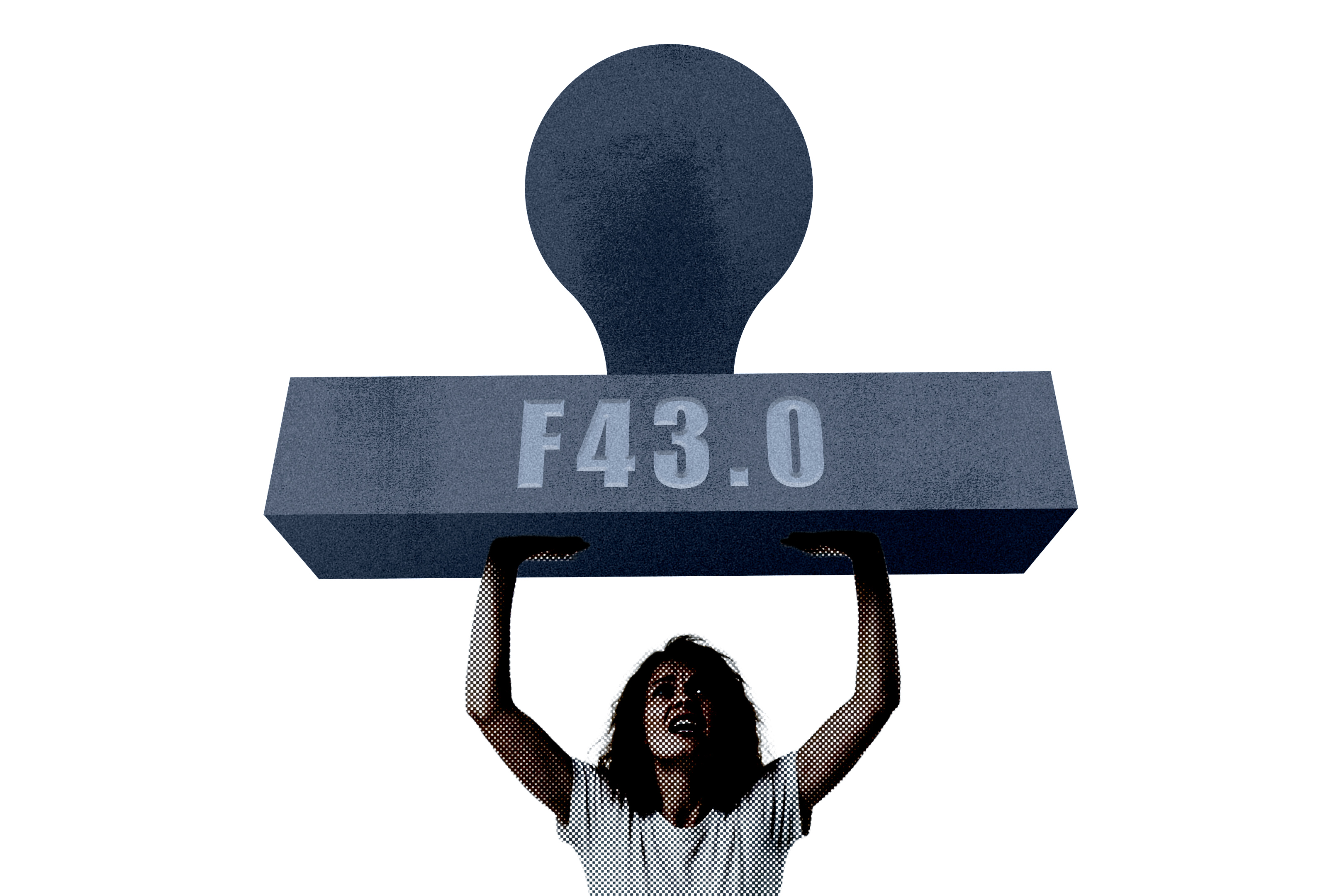
Diseases are assigned ICD codes in accordance with the World Health Organization’s (WHO) International Classification of Diseases, of which there are thousands. The unions disagreed on what the ICD-10 code F43.0 (acute stress reaction) means in terms of the duration of paid sick leave.
According to the interpretation of the Association of Finnish Sheet-metal and Industrial Insulation Employers (MTHL), which represents employers, sick pay would need to be paid for a maximum of three days if a doctor diagnoses an employee with an acute stress reaction. The Industrial Union argued that the ICD code, on its own, could not limit the duration of sick pay, and took the matter to the Labour Court.
THE COLLECTIVE AGREEMENT DID NOT SPECIFY THE IMPACT OF ICD CODES ON SICK PAY
An acute stress reaction is a medical condition for which sick leave has been unofficially referred to as “mourning leave.” The symptoms are caused by exposure to significant physical or mental stress and usually subside within a few days. If the symptoms persist for a longer period, it is usually a stress-related trauma disorder.
The employers’ association argued that, over the years, a practice had developed in the application of the collective bargaining agreement whereby a diagnosis of acute stress reaction would limit paid sick leave to a maximum of a few days. The Industrial Union and its predecessor, the Finnish Metalworkers’ Union, would have approved the practice.
The right to sick pay must be assessed on a case-by-case basis.
The Labour Court did not accept the claim that an established practice of application existed between the parties. Furthermore, the collective bargaining agreement does not contain any explicit provisions regarding the significance of the International Classification of Diseases codes for the payment of sick pay.
The Labour Court upheld the Industrial Union’s interpretation that an acute stress reaction, as diagnosed in a medical certificate, cannot by itself determine the length of the sick leave period for which an employee is entitled to receive pay. The right to sick pay must be assessed on a case-by-case basis. The employer must take into account the circumstances and, if necessary, other findings in addition to the doctor’s diagnosis.
The Labour Court’s ruling has broader implications
The Labour Court’s decision may be considered to have broader implications for the working life, even though the legal proceedings centred specifically on a diagnosis related to an acute stress reaction – that is, ICD-10 code F43.0.
– At the Industrial Union, our position is that no other individual ICD code alone – even if it is listed on a medical certificate – can limit the duration of paid sick leave, says Meri Heikelä, Employment Lawyer at the Industrial Union.
The duration of the incapacity for work must be assessed on a case-by-case basis.
– This evaluation must take into account various work-related factors and, for example, the employee’s personal characteristics.